A Word on Our Nisidotam Language Project, part 3: Open Your Heart and Listen

Iskikamizige-giizis (Boiling Sap Moon) / Namebin Giizis (Suckerfish Moon)—April 25, 2026
At the end of the post, you'll find a list of Ojibwe essential words and phrases from the text, along with audio recordings!
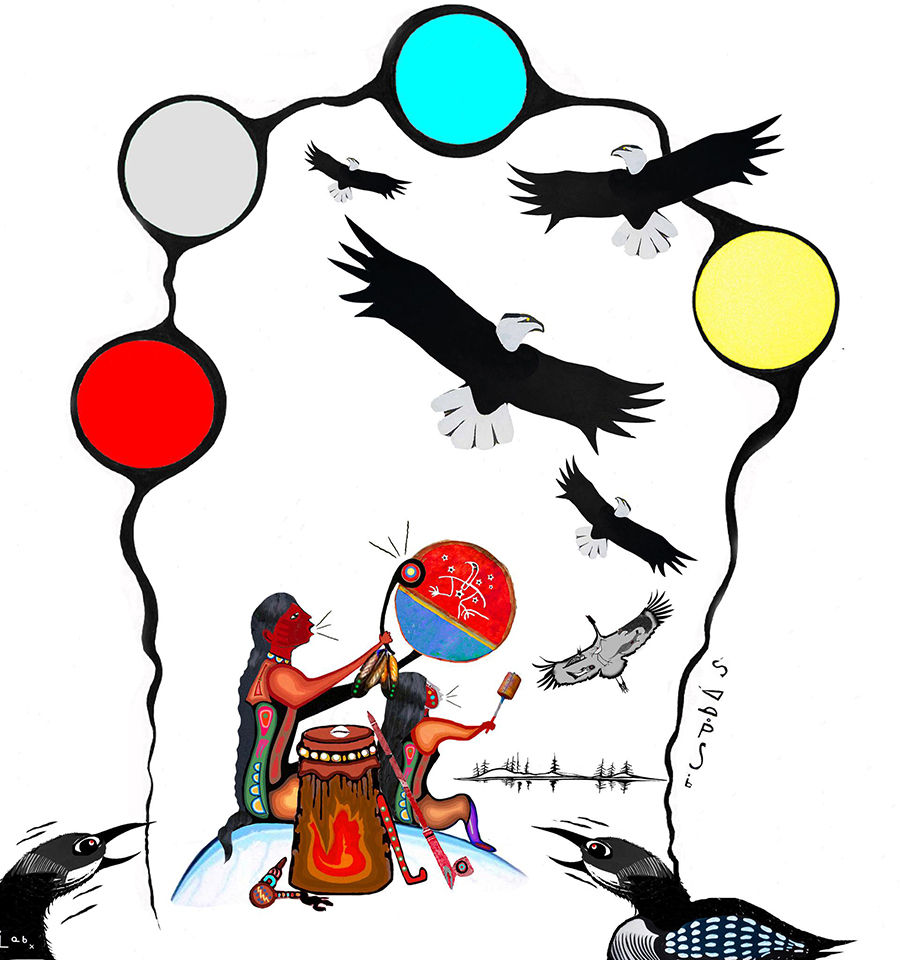
Aaniin, biindigen miinawaa nigikinoo'amaage wigamigong enji-zaagi'iding miinawaa gikendaasong.
Hello! Welcome once again to my Teaching Lodge, a space filled with love and learning.
At the heart of our Nisidotam Language Project is the concept of madwewechigewin—the creation of sound. Madwewechigewin serves as the cornerstone of the Ojibwe language, worldview, and spiritual practice. Sound, rhythm, and oral tradition (aadizookewin) are crucial for comprehending Anishinaabe izhitwaawin (Anishinaabe culture and belief system, ways of thinking and being), connecting the physical world to the spiritual realm.
Turtle Mountain elder Jessie Cree and I believe that enforcing the rigid grammatical rules of European languages on Anishinaabemowin (the Ojibwe language) interferes with our spiritual connection, hindering our complete understanding of our traditional spiritual and cyclical relationship with nature and the world. Our language project aims to restore the traditional ways of speaking the language, as it was before the imposition of English-based grammar rules and the non-Indigenous notion of "inanimacy."
Let's explore the importance of sounds and sound creation within Anishinaabe cosmology and its connection to Anishinaabe (Ojibwe) phonology.
In Anishinaabe understanding, natural resonances—such as wind, rain, thunder, or the "heart-sound" of drums and rattles—are considered active forces of creation. This notion is known as madwewewin, or "it reverberates." It is no coincidence that the Medicine Lodge, central to Anishinaabe izhitwaawin, the Midewiwin, is often translated as 'Sound Resonance.' It is believed that the Universe's birth began with a sound, akin to that of a zhiishiigwan (rattle).
In traditional beliefs, thunder is linked to the Animikiig, or "Thunderbirds," who create thunder by flapping their wings and lightning by blinking. The term Animikii means "thunderer." Another name for the Thunderbird is binesi, which translates to large bird. However, thunderers are also categorized in other entities: the most prominent is ajijaak, the crane, followed by species that live in water, such as maang (the loon), and those that reside on land, like binewag (partridges and grouses) and other prairie birds. We will now examine how Thunderbirds, the Crane, and the Loon are deeply interconnected figures in Anishinaabe cosmology, symbolizing a balance between upperworld power, sound, and earthly wisdom.
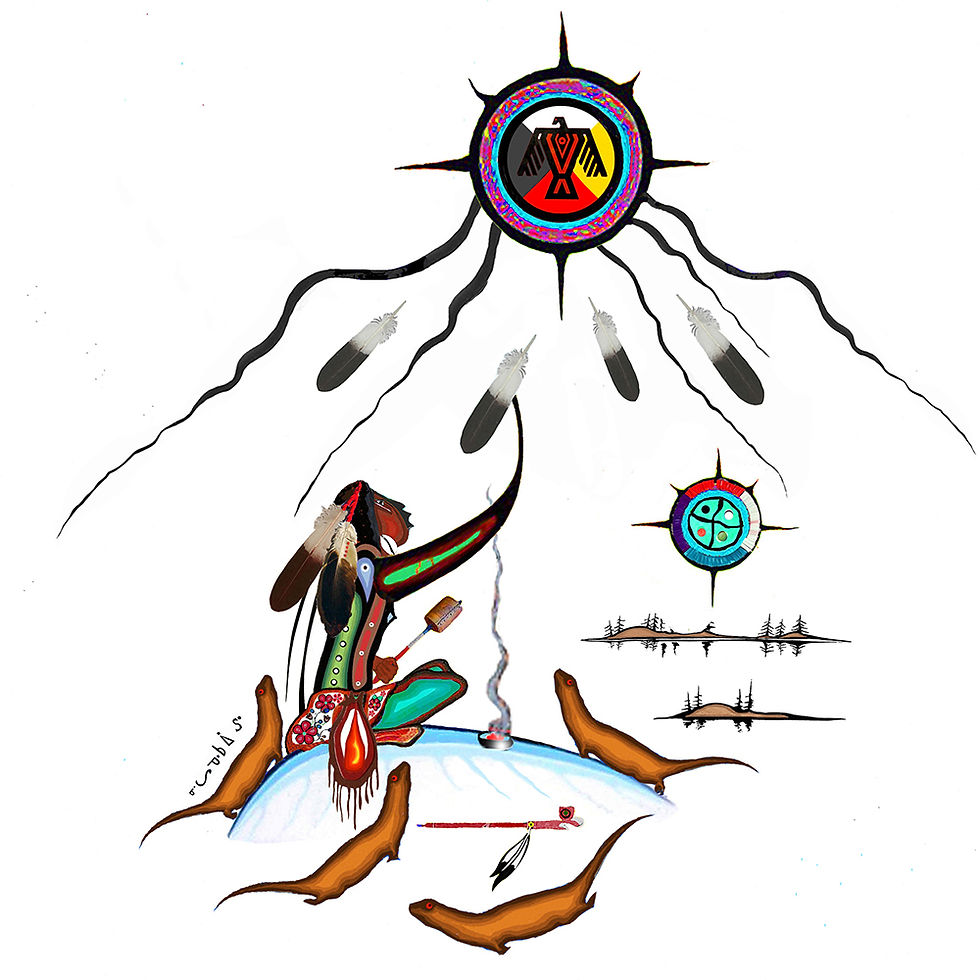
The universe's formation, as we know it, began with thunder beings, including a crane and a loon, flying through a void, carrying the sound of creation, represented by zhiishiigwanan, the rattles still used in ceremonies. The Thunder Beings were involved in a conflict; one Thunderer had a melodious voice and symbolized goodness, while the other, causing thunder and lightning, embodied chaos. The crane, also called Baswenaazhi or "echo maker," has a far-reaching voice and is the most vocal and prominent in our clan system. The loon, often known as Zaaga'iganan Gaa-Ganawendang ("He who Protects the Lakes"), earned his leadership role in the clan system by bravely confronting the Thunder Being. This cosmic struggle between good and chaos resulted in the creation of life. To the Anishinaabeg, both Binesi and Ajijaak are ogimaag or leaders; with the crane and loon holding the first and second positions in council, the Thunderbird leads in the spiritual and ceremonial realms.
The story of this cosmological conflict is inscribed on the loon's back, visible as small dots on its black plumage. Legend tells that Maang (the Loon) once collected all the stars and used their voices to sing resonant songs. Wenabozho, the semi-spirit and benefactor of the Anishinaabeg, who had observed the battle between the Thunder Beings in the night sky, then requested the Loon to return the stars to the sky. Since that time, on summer nights, we can still see the Thunderbird/Crane and the Loon in the sky. The Thunderbird/Crane forms the shape of the 9-star Echo-Maker constellation (the Greek constellation of Cygnus), flying in a wide circle around the North Star, which is part of the Maang ((the Latin constellation of Ursa Minor).
Thus, sound originated in the cosmos and brought forth creation (life). This concept is evident not only in Anishinaabemowin but also in aadizookewin (our storytelling). Since ancient times, aadizookewin has been regarded as a ritual invocation where the storyteller's voice acts as a channel, breathing life into stories (bimaadizi). Consequently, sound is vital in bringing tales to life. Although I am not an oral storyteller and instead convey stories through writing, sound is a recurring motif in my narratives. Through my written stories and artworks, I delve into Anishinaabe perspectives, incorporating the spiritual significance of sound, sky-beings, and the natural world. My storytelling often links the sound-making of the Thunderbird (sky power) and the loon (water power) to the Midewiwin (Grand Medicine Lodge) traditions, emphasizing the healing powers inherent in these connections. Ceremonial objects and natural phenomena, such as rattles (zhiishiigwanan), the thunder (animikiii), the popping of miinikaanan or seeds, and the presence of "singing rocks" (asiniig negamowaad), are frequently included, viewing them as living, sounding entities that hold ancient wisdom and healing medicine.
From the Anishinaabe viewpoint, there is a direct link between language and sound-making tools: the Ojibwe word for truth, debwewin, is rooted in the concept of "making sounds at a distance" or being heard, indicating that truth is a sound that is audible, shared, and precisely communicated. The verb debwewidam means "s/he is heard speaking or making vocal sounds at a distance." Analyzing the stem of this verb reveals deb (enough, adequate, reach) and -wewid (s/he makes sounds). Since the Ojibwe term for drum is dewe'igan, a shortened form of a word that literally means "instrument that makes the circular (returning) sound of the heart," it suggests a direct connection between our sacred drum at the heart of our culture, sound-making, and truth-speaking. It is called Debwe-ode'-wewe-igan: "speaks truth-her/his heart-sound-instrument."
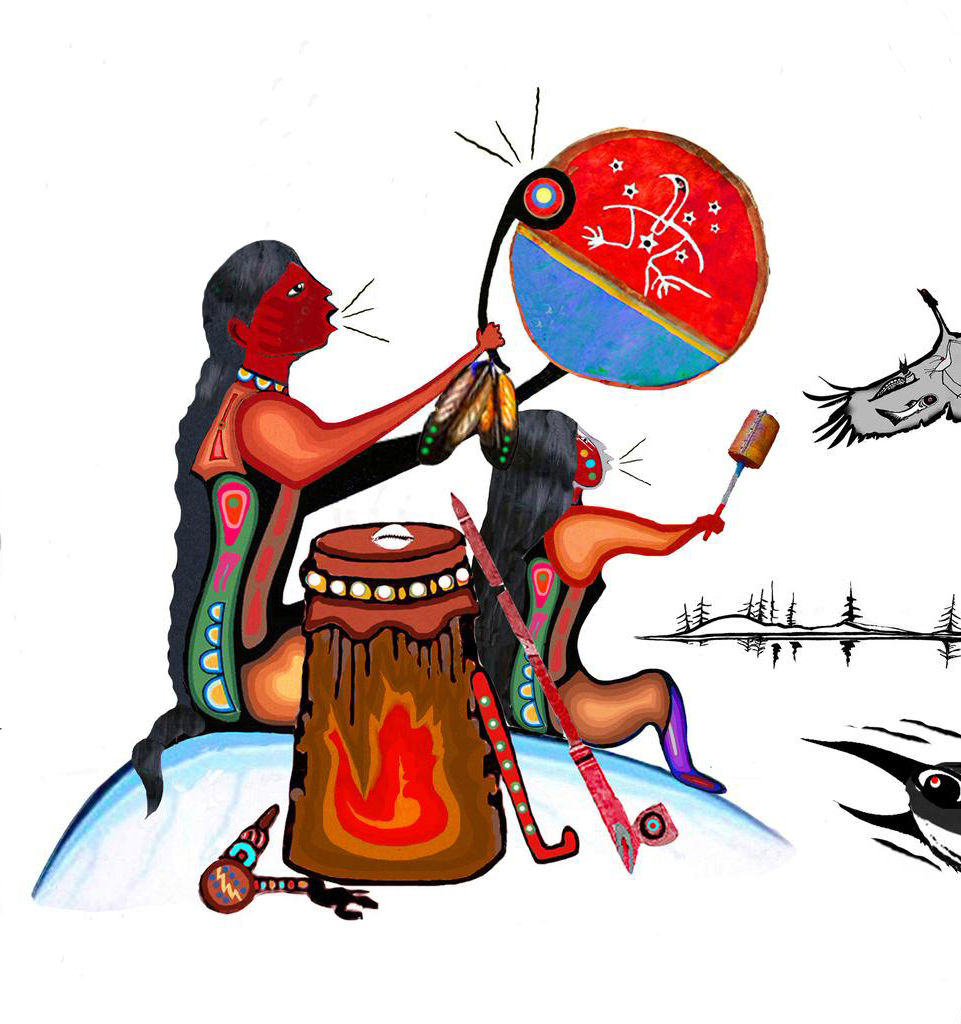
How exactly does our Nisidotam language teaching method connect to the earlier discussed concept of madwewechigewin, or sound-making?
The Nisidotam method, unlike other Ojibwe language teaching programs, prioritizes phonetics over grammar rules. This approach, which highlights auditory learning, precise pronunciation, and the deconstruction of words into meaningful sounds, aids in understanding word construction and their authentic meanings.
The Nisidotam approach emphasizes the importance of auditory learning and encourages open communication of our thoughts, free from the constraints of rigid grammar rules found in foreign languages. It is crucial to understand that simply learning to speak and write the language using English grammar is not enough. To preserve the distinct Anishinaabe perspective from English, it is vital to learn the spoken language of our ancestors. To truly grasp the Anishinaabe's spiritual and cyclical connection with nature and the world, we must learn the language through our ears and free from the influence of linear English grammar rules.
Fundamentally, Anishinaabemowin is a language that connects more with the heart than the intellect. To truly learn it, one must open their heart instead of just a grammar book. To genuinely learn it, one should open their heart rather than merely a grammar book. This idea is exemplified by the verbs bizindan and bizindaw, which translate to "to listen to something" and "to listen to someone," respectively, along with the manner adverb bizaan.
Bizaan means "be quiet," "be still," or "calm." It is often used as a command to be quiet or to act "casually, freely, or without concern." Bizindan means 'listen to it!' and bizindag means 'you all listen to it!' Meanwhile, bizindaage translates to "s/he listens to someone" or 'listens to people." The words bizindaagen and bizindaageg mean 'listen to someone!' and 'you all listen to someone!' respectively. These terms for listening (bizindan, bizindaw/bizindaage, and bizindaan) are related to and resemble the sounds of the verbs bizaanide’e, meaning to have a peaceful heart, bizaanate, meaning to be still, bizaanabi (sit quietly), and bizaani-ayaa (to be calm).
Geget sa go. Absolutely! We must stay still and bizindan: listen with our hearts to the sounds of Anishinaabemowin, our beautiful language...
Ojibwe verbs and verb conjugations associated with being quiet and attentive in teaching and storytelling:

bizaan— to be quiet; to be still; to be calm; quiet, quietly; still; at peace; casually; freely; without concern (adverb); be quiet! (second person singular imperative)

bizaanabi—to sit quietly: verb cat. 1 animate intransitive (VAN(1)IN)*

bizaanate—to be still: verb cat. 2 animate intransitive (VAN(2)IN)*

bizaani-ayaa—to be quiet: verb cat. 1 animate intransitive (VAN(1)IN)*

bizaanide’e—to have a peaceful heart: verb cat. 1 animate intransitive (VAN(1)IN)*

bizindaage—to pay attention to someone or to people; listen to someone or to people: verb cat. 1 animate intransitive (VAN(1)IN)*

bizindaageg—everyone, pay attention to her/him-them! (plural imperative form of the verb bizindaage)

bizindaagen—listen to her/him-them! (singular imperative form of the verb bizindaage)

bizindam—to listen; to pay attention; to heed: verb cat. 1 animate intransitive verb of feeling, thinking, sounding (VAN(1)IN-FTS)*

bizindan—to listen to something; to pay attention to something; to hear something; to obey something: listen to it! verb with a transitive stem and a cat. 2 animate object (VTRAN(2))*

bizindaw—to listen to someone; to pay attention to someone; to hear someone; to obey someone: verb with a transitive stem and a cat. 1 animate object  (VTRAN(1))*
Aaniin, biindigen miinawaa nigikinoo'amaage wigamigong enji-zaagi'iding miinawaa gikendaasong—
Hello! Welcome once again to my Teaching Lodge, a space filled with love and learning.
aadizookewin—sacred-storytelling
ajijaak—a sandhill crane; the Crane Clan; the Crane constellation (Cygnus)
animikii (-binesi)—a thunderbird; a thunderer; a thunder clap
Anishinaabemowin—language of an Anishinaabe Nation; language of an Indigenous Nation; Ojibwe language
asiniig negamowaad—rocks that sing
bimaadizi—be alive (verb cat. 1 animate intransitive (VAN(1)IN))*
(animikii-) binesi—large bird; the Thunderbird
debwewin—truth; honesty; truthfulness
debwewidam—can be heard making sounds from afar (verb cat. 1 animate intransitive verb of feeling, thinking, or sounding (VAN(1)IN-FTS))*
Izhitwaawin— ceremonial practice; spiritual belief system; ways of thinking and being
maang—a loon
madwewechigewin—the creation of sound
madwewewin—resounding, reverberation
miinikaanan—seeds; wild peas
zhiishiigwan, zhiishiigwanan—ceremonial rattle, ceremonial rattles
*NOTE: Refer to Understanding Ojibwe Verb Classification Techniques for Language Learners for information on verb classifications.
THE LINKS:
A Word on Our Nisidotam Language Project, part 3: Open Your Hear and Listen


Comments